
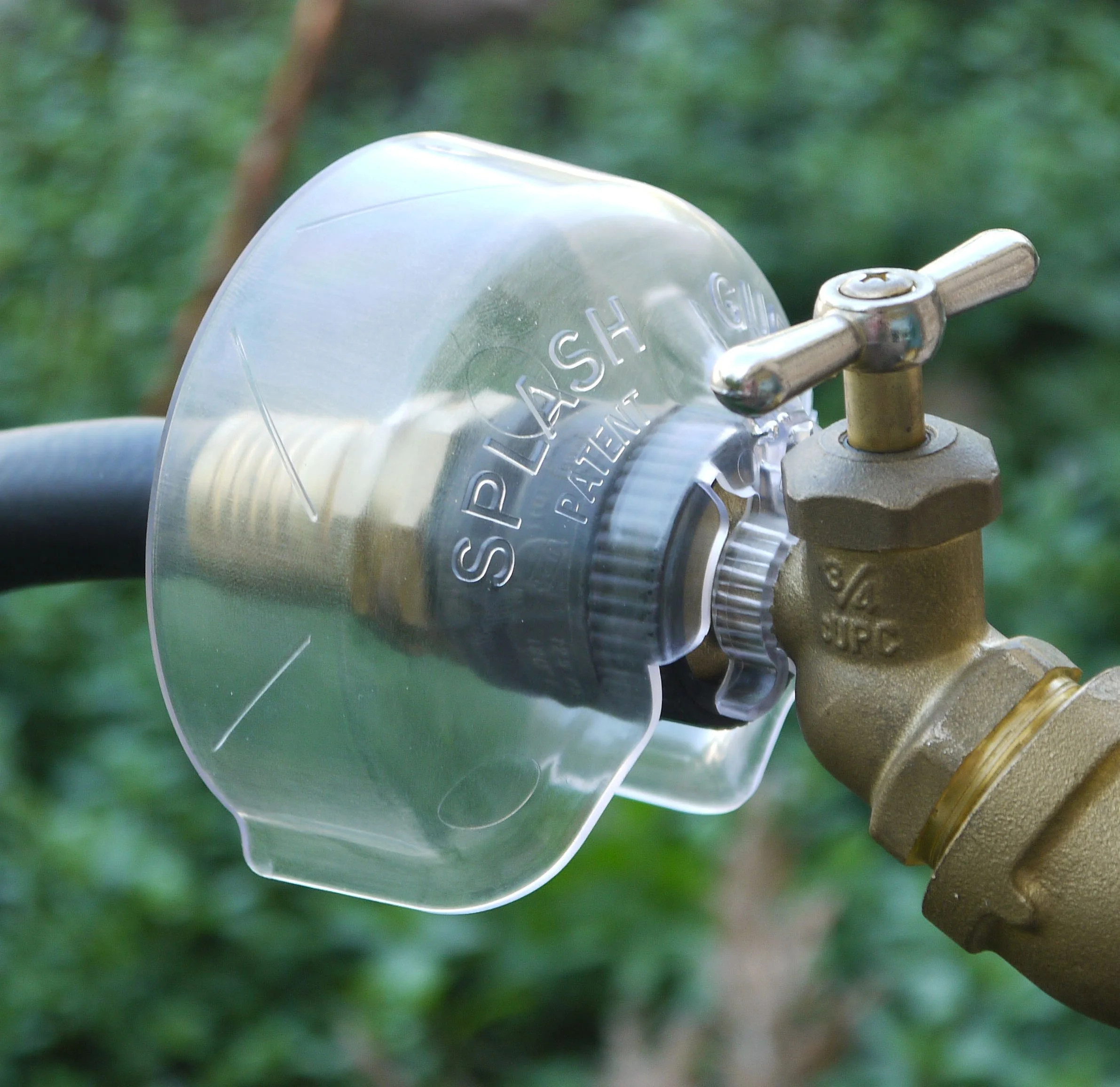
How to Install an Anti-Siphon Vacuum Breaker Cover (Step-by-Step)
Splash Guppie installation
If your outdoor faucet sprays or drips every time you use it, installing a cover over the anti-siphon vacuum breaker is a quick fix — no tools, no plumbing experience, and no risk to the safety function of the device itself. Here's exactly how to do it.
What you'll need
A Splash Guppie hose bibb cover (no tools required)
That's it
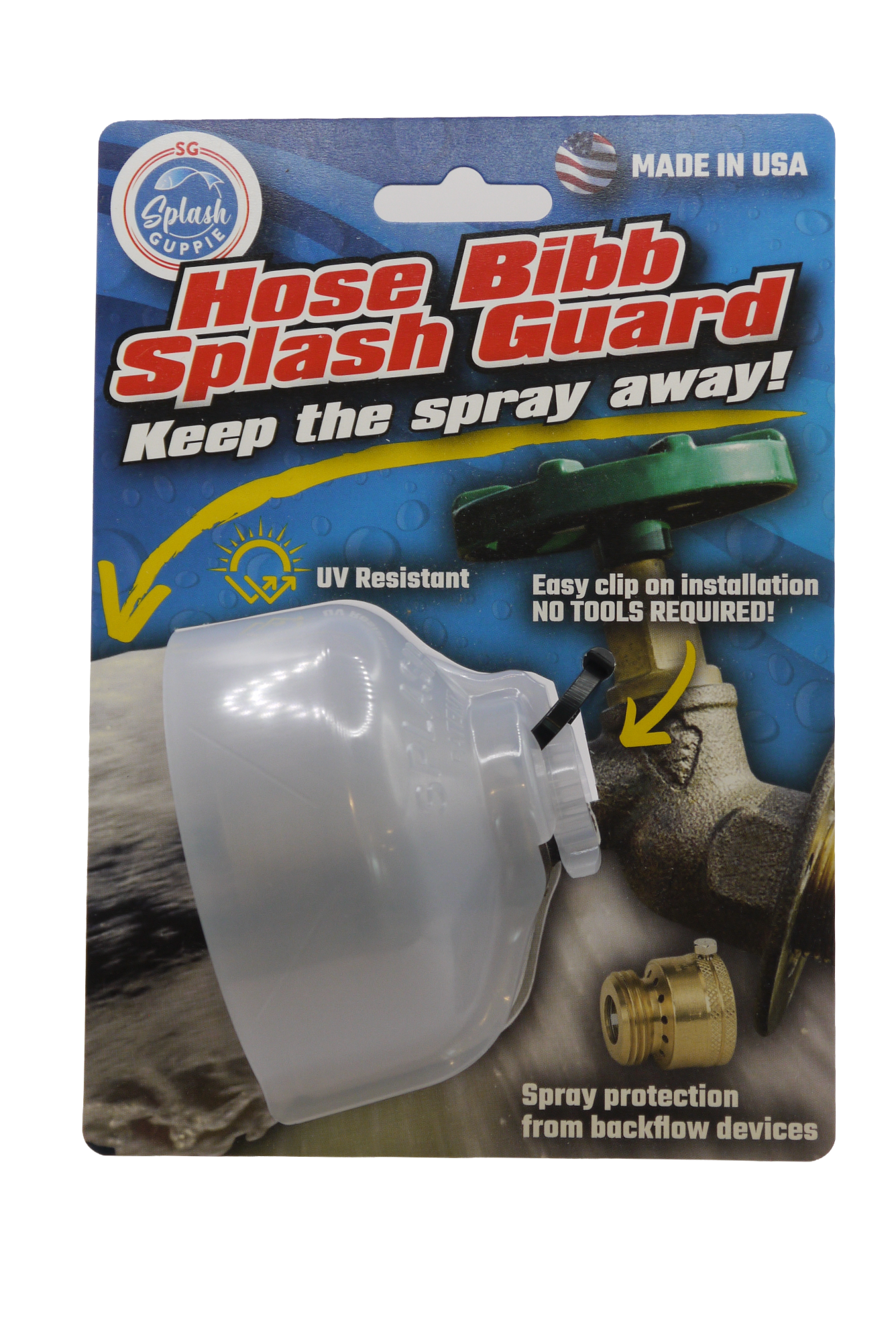
Cloud White Splash Guppie
Step 1: Locate your anti-siphon vacuum breaker
This is the small cylindrical or boxy attachment between the wall (or pipe) and the faucet handle. If your outdoor faucet sprays when you turn it on, this is almost always the source.
Step 2: Remove any existing set screws
Some vacuum breakers come with small set screws meant to discourage removal (since removing the device entirely is against code in many areas). Before installing your cover, check for and remove any set screws sticking out, as these can prevent a snug fit.
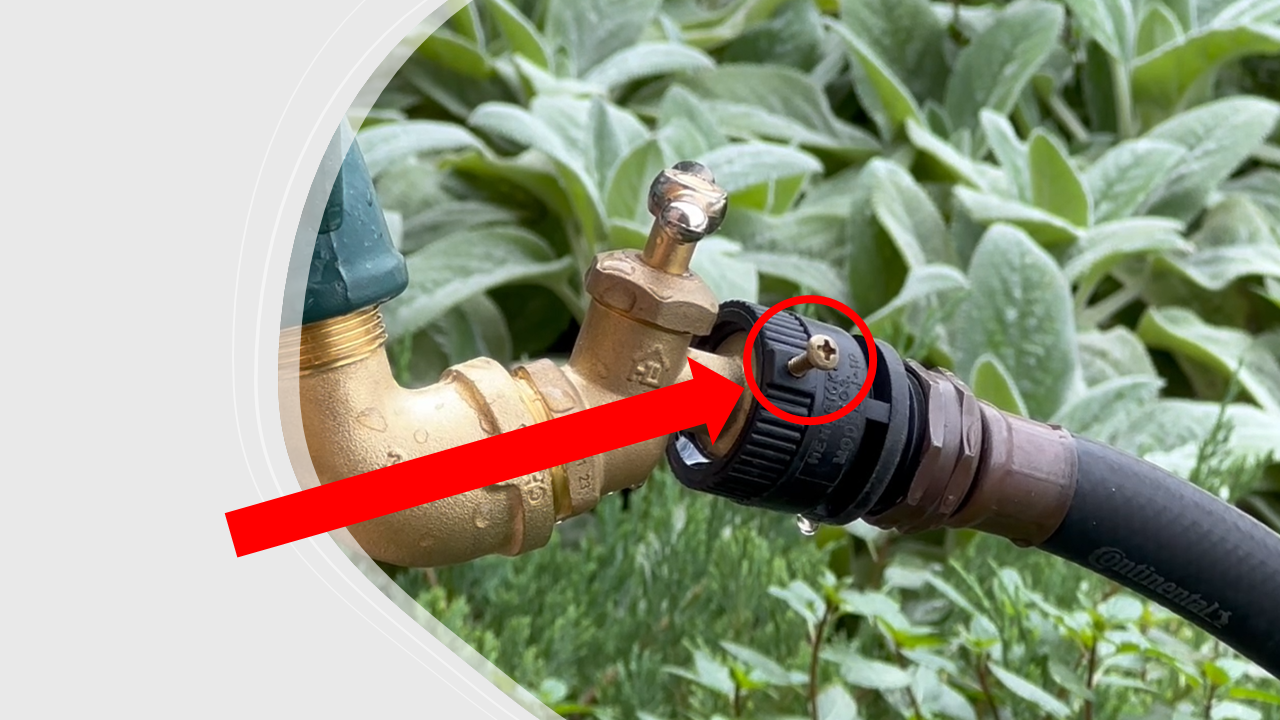
Anti-Siphon Valve Set Screw
Step 3: Clip Splash Guppie onto the hose bib
Position the cover so it fits between the backflow device and the handle, then snap it into place. It's designed to clip on securely without tools or adhesive.
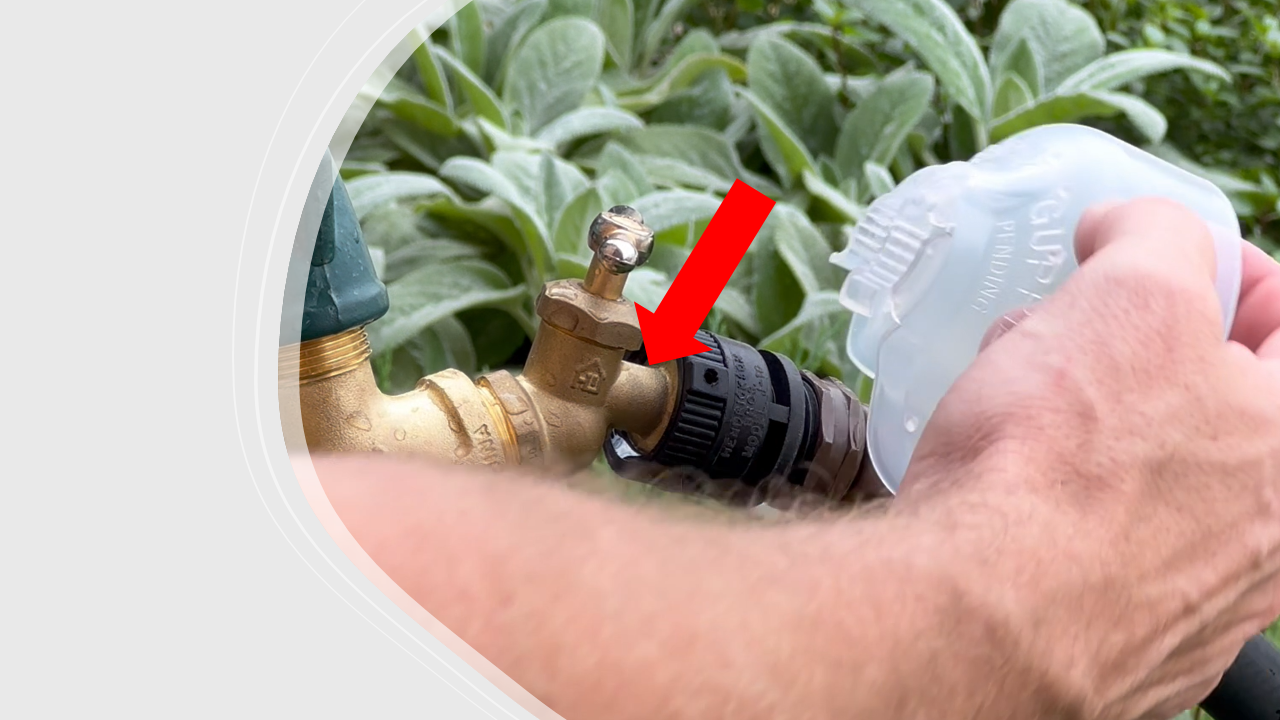
Splash Guppie Placement
Step 4: Rotate to your preferred orientation
Once clipped on, rotate the cover so the opening faces downward, or toward whatever direction keeps spray away from walkways, plants, or anywhere you stand while using the hose. This is the step most people skip — taking 10 extra seconds to get the orientation right makes a big difference in how well it keeps you dry.
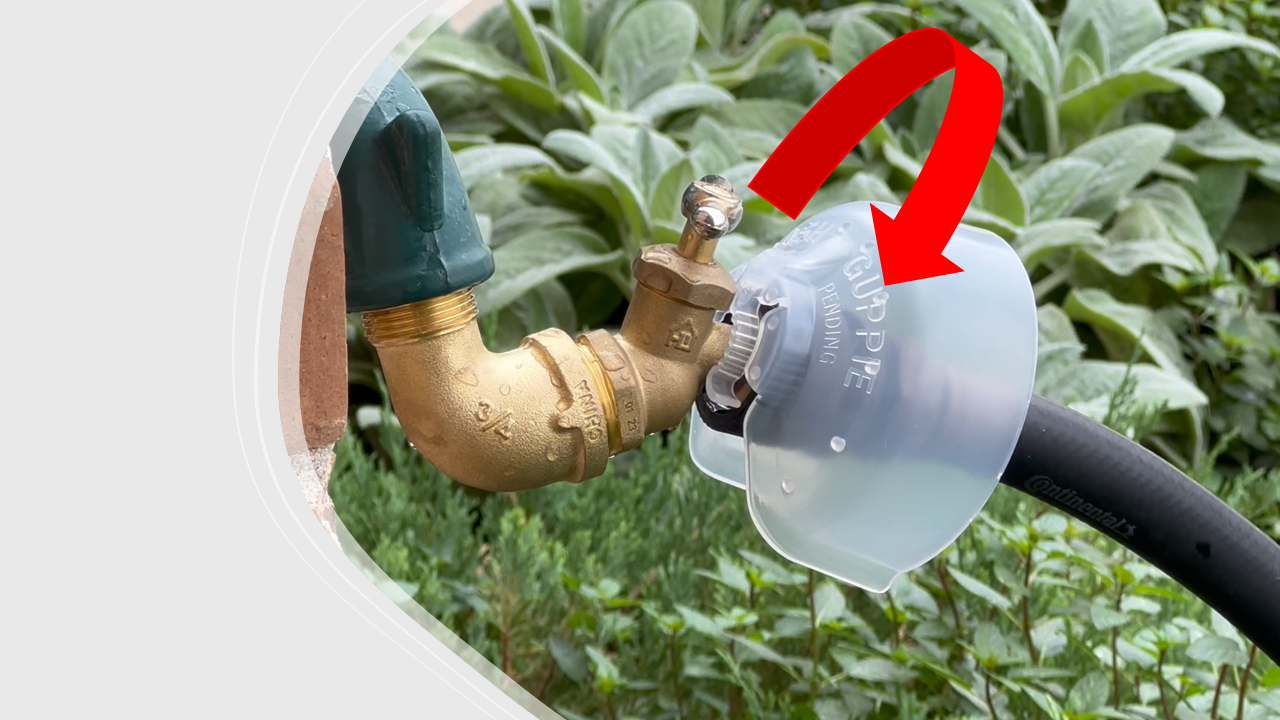
Rotate for proper orientation
Step 5: Test it
Turn the water on briefly and watch where the water goes. Adjust the rotation if needed — it should sit snugly enough to stay in place, but you can still rotate it by hand.

Splash Guppie Guarding Spray
Tips for best results
Near walkways: Orient the opening straight down so spray drips onto the ground, not onto foot traffic.
Near garden beds: Aim it slightly toward the bed so excess water doubles as a small amount of extra watering.
Multiple colors available: If the cover will be visible against your home's siding or trim, color options (like Cloud White or Crystal Clear) can help it blend in.
Troubleshooting
It doesn't fit snugly: Double check that all set screws have been removed from the vacuum breaker first — these are the most common culprit.
It still sprays a little: Some spray during the initial pressure change when first turning on the water is normal even with a cover; the goal is reducing where that water lands, not eliminating it completely.
Still having trouble: Reach out through our [Contact page] and we're happy to help troubleshoot your specific setup.
That's it — a five-minute fix for a problem that, until now, you may have just been living with every time you watered the garden.
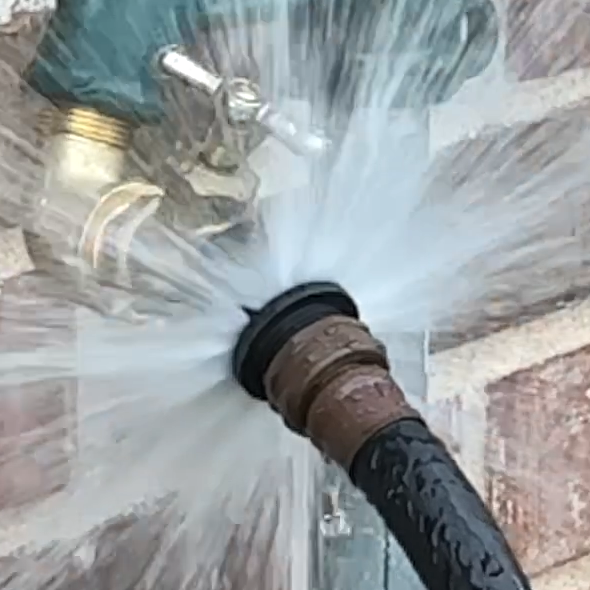
Why Does My Hose Bib Spray Water When I Turn It Off?
Understanding why backflow prevention devices spray.
If you've ever turned off your outdoor faucet and gotten an unexpected spray of water to the face, hands, or shoes, you're not alone — and you're not doing anything wrong. This is actually a sign that an important safety device on your faucet is working exactly as designed.
It's your anti-siphon vacuum breaker doing its job
Most outdoor faucets installed in the last couple of decades have a small device built into or attached to the spigot called an anti-siphon vacuum breaker (sometimes just called a backflow preventer). Plumbing codes in most areas require these devices on outdoor hose bibs for a good reason: without one, if water pressure drops suddenly (say, during a water main break or heavy irrigation use), contaminated water, fertilizer, or chemicals from a hose end could actually get siphoned backward into your home's clean water supply.
To prevent that, the vacuum breaker is designed to vent air — and sometimes a bit of water — whenever pressure shifts. That venting is what causes the spray or drip you're noticing. It's a feature, not a malfunction.
Why this becomes annoying fast
Knowing it's "supposed to happen" doesn't make it less irritating in practice. Depending on how your faucet is oriented, that spray can end up:
Soaking your shoes or pant legs every time you connect a hose
Spraying pets who walk past at the wrong moment
Hitting you in the face if you're crouched down adjusting a hose connection
Dripping continuously onto siding, brick, or a deck, leading to staining or water damage over time
What people try (and why it doesn't work)
A few common workarounds tend to cause more problems than they solve:
Taping over the vent — This can trap pressure and cause leaks elsewhere, and may damage the device.
Removing the vacuum breaker entirely — This is not advisable. It removes a safety feature required by code in most jurisdictions, and can put your home's water supply at risk.
Just living with it — Understandable, but unnecessary given how easy this is to solve.
The simple fix: redirect, don't disable
The right approach isn't to disable the vacuum breaker — it's to redirect where the spray goes. That's exactly what a product like Splash Guppie is designed to do. It clips directly onto the hose bib between the backflow device and the handle, acting as a shield that catches and redirects spray downward instead of out toward you. It doesn't interfere with the vacuum breaker's function at all — it just keeps the water where you want it.
If you're tired of getting sprayed every time you water the garden or wash the car, it might be time to add a simple cover rather than fight the design of a safety device that's there to protect you.